
Preventario Preventario

What goes wrong in your industry, and when.

Manufacturing, construction, logistics and energy each have their own page here. This one is about the part they share: the handover at ten at night, the contractor who was briefed at a different site, the week the order book doubles.

None of that is written down as a sentence anywhere. It is in the diary, and it is where people get hurt.

Safety teams at

MEINHARDT STAHLWERKE Kessler Logistik SALZACH ENERGIE TREBBIN Antriebstechnik Reimann Tiefbau FISCHBACH KRANBAU
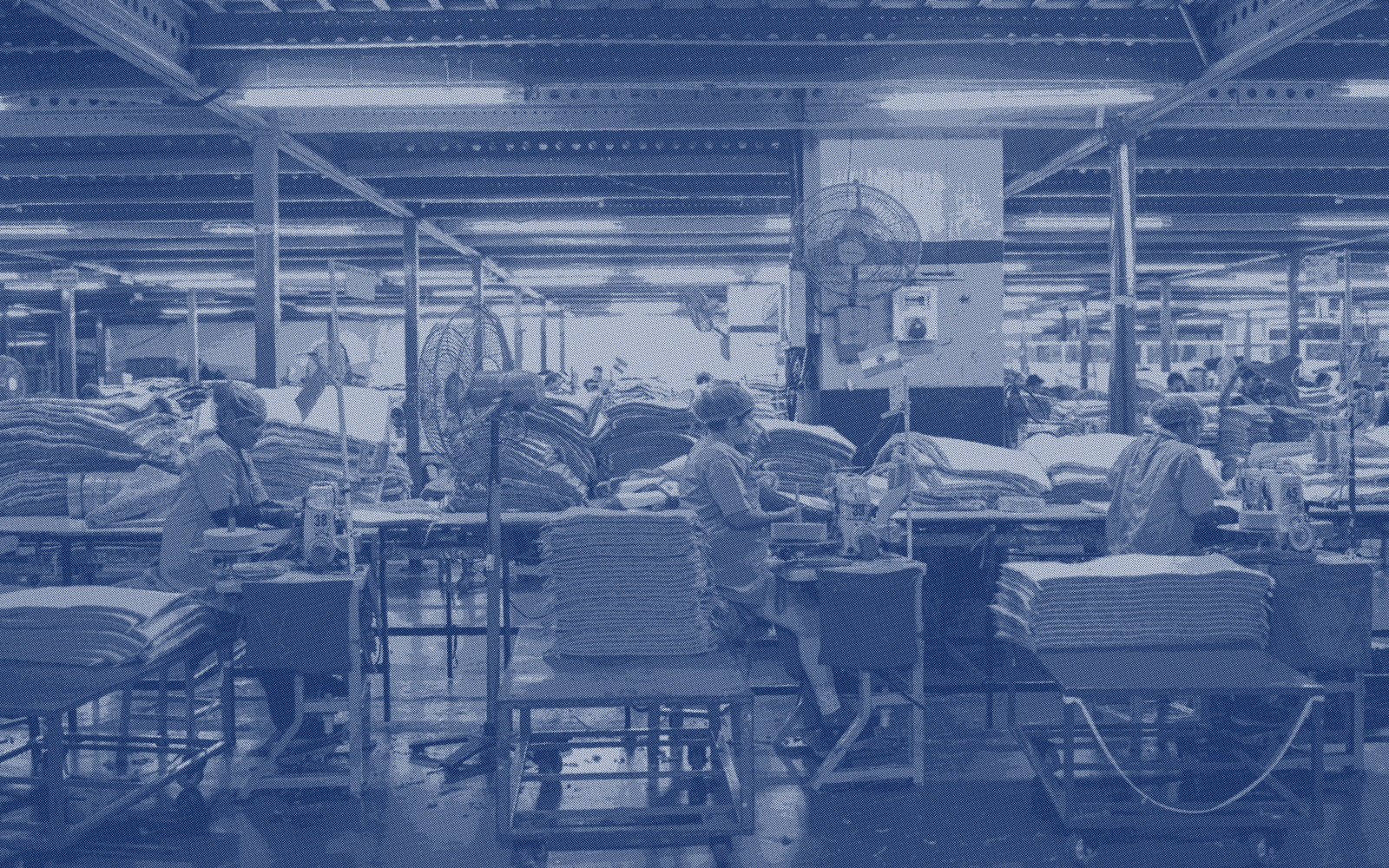
An assembly line in a production hall, with three people working at a bench beside the racks

The danger is in the day, not in the building.

A press shop is dangerous for about ten minutes at a time, and it is rarely the ten minutes anyone planned for. Five of those minutes come back in every operation we have walked into, whatever it makes.

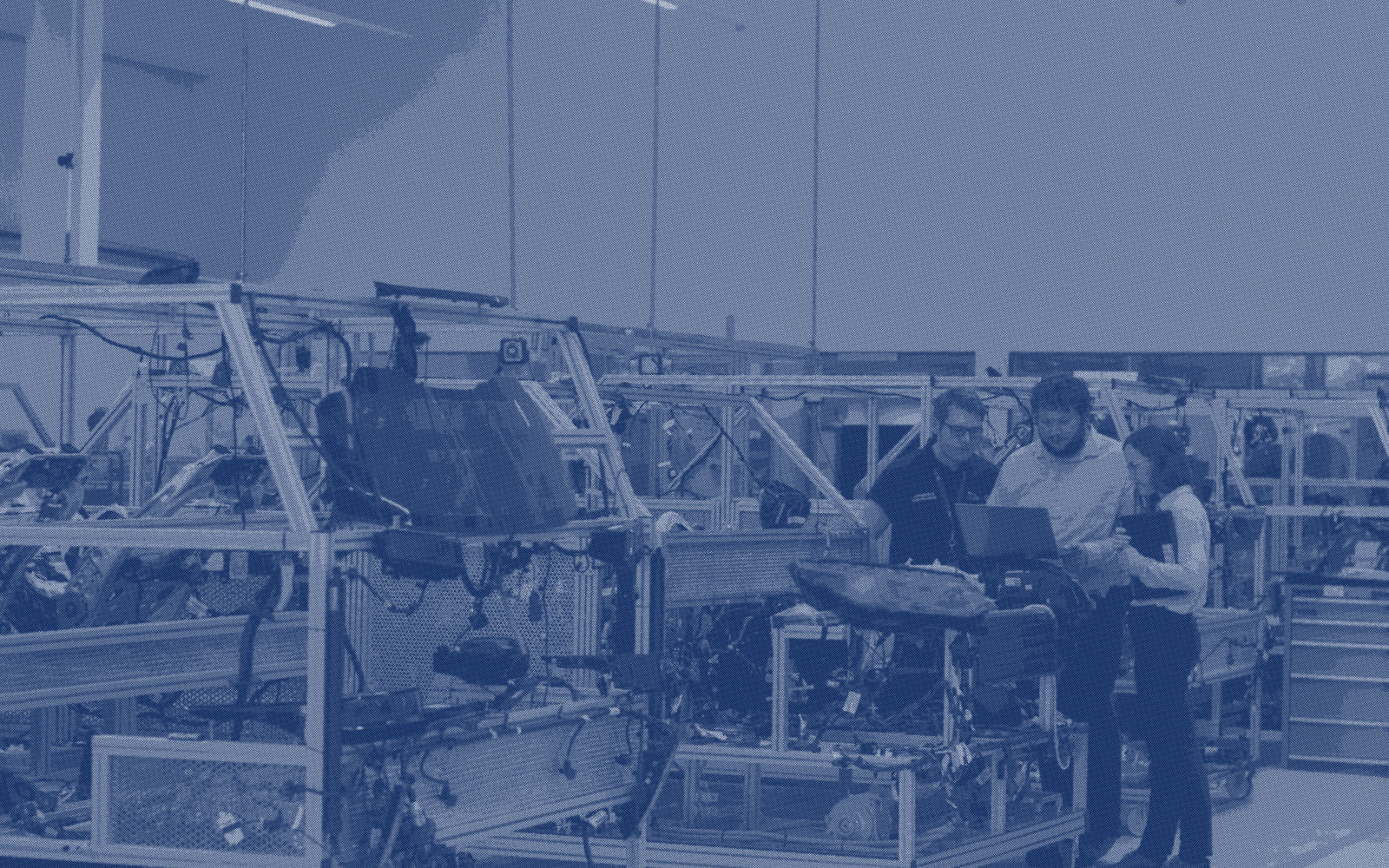
Two workers in hard hats standing close together, going through a document one of them is holding

01

Ten at night, when the line changes hands

The shift going home knows which guard has been off since the afternoon, which pallet is standing where it should not, and which door has been propped open all day. Some of that gets said at the gate. The part that does not get said is what the next shift walks into, and they walk into it in the dark.
02

The fitter who was briefed somewhere else

He arrives with a permit signed at head office and a route in his head from the last plant he was in. He is on your floor for four hours. Nobody has time to walk him past the crossing where the trucks come round from the left, so he finds it the way everyone finds it.

03

Monday morning, first day on an agency contract

A vest, a locker, forty minutes of instruction and a signature. By Tuesday afternoon he is picking in an aisle he has walked four times. He has been told what the rules are. He has not once been in the second where they matter.

04

The week the order book doubles

Peaks are announced weeks ahead and still arrive as a surprise. More people, more movements, the same aisle width and the same two gates. It is also the week nobody wants to be the one who stops the line to talk about any of it.

05

Maintenance next to something that is still running

There is no window in which the plant is off, so the work happens a metre away from the part that is not. The person doing it has been told to be careful. That is the whole of the preparation, and it is the same sentence in a warehouse, on a site and in a switch room.

All five of these are in somebody’s annual briefing. The briefing happens once a year, in a room, to people who have not been anywhere near the situation since the last time it was read out to them.

What a team does instead

Four industries, one short list of things that hurt people.

What changes between them is not the list. It is the order: which item comes first on a shift, and which one your people have already stopped seeing. Open yours.

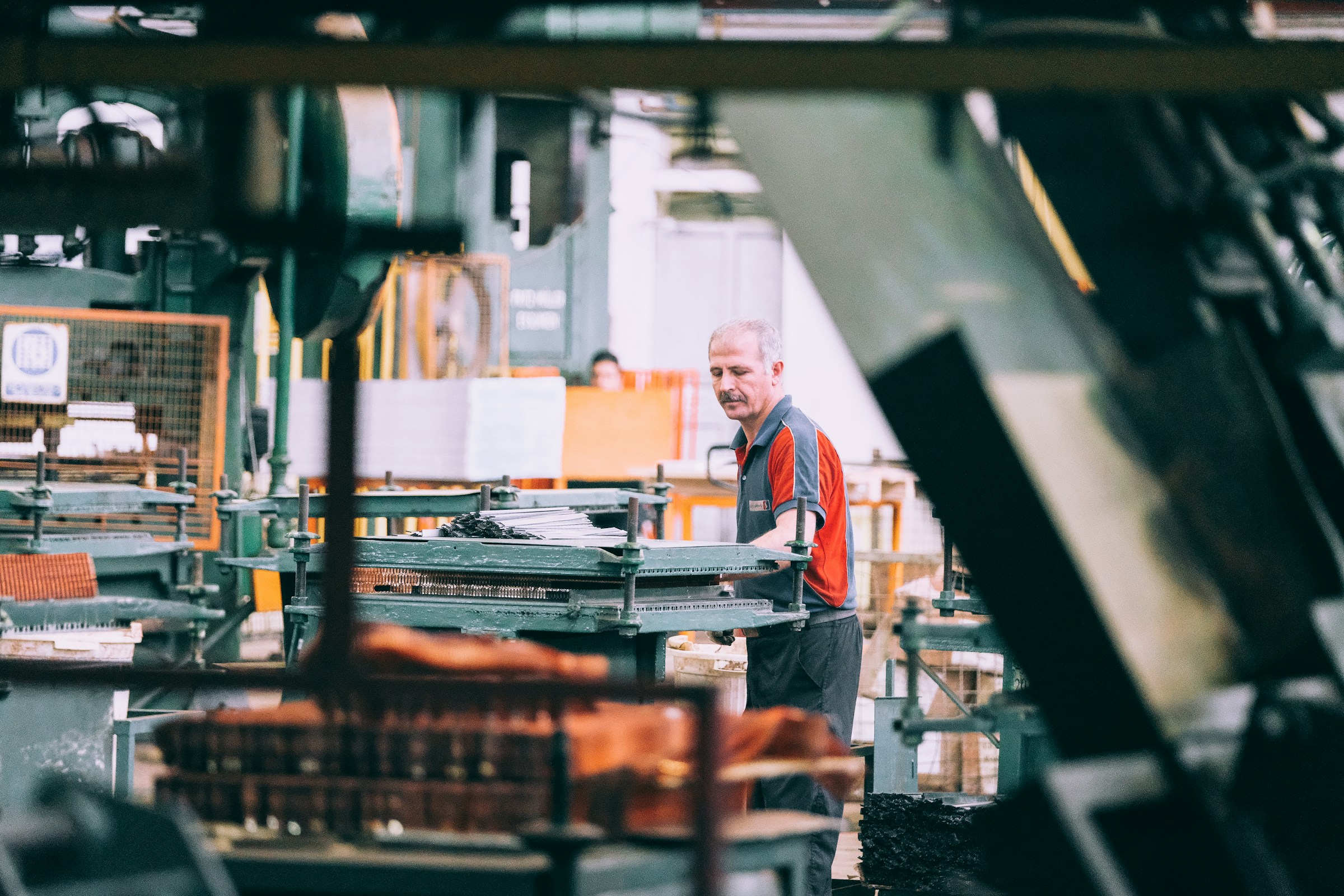
A man working at a press in a metal shop, with more presses standing in a row behind him

A press shop, a site, a warehouse aisle, a switch room.

Four different places to stand, and the same handful of things that put people in hospital in all of them. A team that has worked through a crossing in one hall recognises the crossing in the next.

Areas that come back

Counted across the four industries in this section.

  • Slips, trips and falls 3 of 4
  • Machinery and tools 2 of 4
  • Internal traffic 2 of 4
  • Falls from height 2 of 4

Which is why a training bought for one plant is usually already the right one for the next.

A man at a press in a metal shop, machines standing close on both sides

Manufacturing

Machines, tools and forklift traffic in one hall.

Hazard areas:
  • Machinery and tools
  • Internal traffic
  • Slips, trips and falls

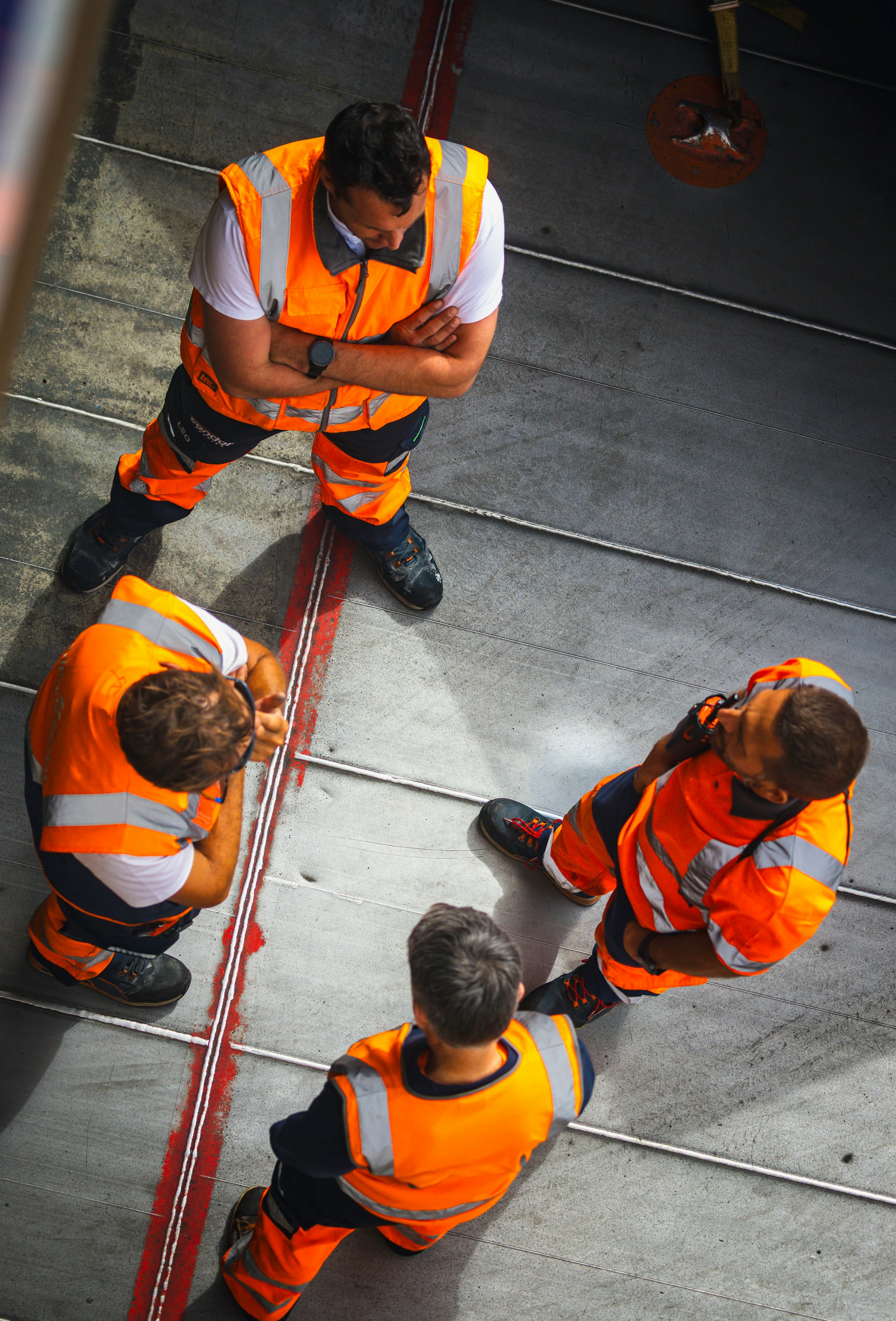
Four workers in high-visibility clothing standing in a circle on a marked concrete floor, seen from above

Construction

A different site every week, a different hazard every week.

Hazard areas:
  • Construction sites
  • Falls from height
  • Slips, trips and falls

A warehouse floor with stacked cartons on pallets and people walking between the racks

Logistics

Lifting, carrying and powered trucks in the same aisle.

Hazard areas:
  • Manual handling
  • Internal traffic
  • Slips, trips and falls

A dark plant interior with overhead cabling and a worker at a bench under a single lamp

Energy

Isolation, switching operations, working at height.

Hazard areas:
  • Falls from height
  • Hazardous substances and fire
  • Machinery and tools

Your operation sits between two of these? That is the usual case. We go through it with you and name the areas that come first.

Arrange a call

Your industry sets the order, not the content.

The reason there is one library and not four: most of what puts people in hospital turns up in all four places, only in a different sequence and under a different name.

A floor is a floor
Spilled oil, a cable across a walkway, a step nobody marked. It is the same fall in a press shop, on a deck and in a picking aisle.
In 3 of the 4
A crossing is a crossing
Somebody driving, somebody walking, and a corner neither of them can see round. The vehicle changes, the second before it does not.
In 2 of the 4
Height turns up uninvited
Not only on a roof. On a platform above a line, on a ladder against a rack, on the walkway over a machine that has to be reached today.
In 2 of the 4
The order is yours
What your assessment puts on page one is what your teams work through first. Nobody sits through a topic that does not touch their work.
Chosen per team, not per plant

It is also why a training booked for one site is usually already the right one for the next. You are not buying an industry package, you are buying the situations your own document names.

Browse by hazard area
Three people standing together at the end of an assembly line, looking at a screen on a trolley

Three operations, three different reasons.

A steel mill, a civil works contractor and a distribution centre. None of them bought this for the same reason, and none of them would describe it the same way.

“We had the same three sentences in the briefing every year. The first time somebody actually stood in front of an open cabinet, they asked a question nobody had ever asked in that room.”
Katrin Vogler, safety manager Salzach Energie — six substations, 240 people
A dim workshop with tool balancers hanging over a row of benches, two people working at the far end
“Our subcontractors are on site for a morning. Now they have walked the crossing before they drive across it, and it took twelve minutes of their day.”
Jonas Reimer, site manager Reimann Tiefbau — civil works, 11 sites at a time
“Two at a time, between shifts. I did not lose an hour of picking for it, and that was the only thing I was going to ask about.”
Anke Bertram, warehouse manager Kessler Logistik — two distribution centres

Safety teams at

MEINHARDT STAHLWERKE Kessler Logistik SALZACH ENERGIE TREBBIN Antriebstechnik Reimann Tiefbau FISCHBACH KRANBAU

Six operations, from a steel mill to a crane builder. Four of them run the same programme at more than one location, and the programme was reviewed in the 2026 Nordverband Arbeitsschutz practice report.

From the document you already have into a running shift.

Four steps. The first uses a document that is already on your desk, and the last one produces a file you can hand to anyone who asks.

  1. 01

    Start from your assessment

    It already names the hazards that occur on this site, area by area, in your own wording. Nothing has to be surveyed again, and nobody has to fill in a questionnaire.

  2. 02

    Choose per team, not per plant

    Maintenance, picking and the gate do not meet the same things. Each group gets the trainings that touch its own work, and nothing else.

  3. 03

    Run it inside the shift

    Two people at a time, five to sixty minutes each, on your own floor. The line keeps running, and a team that wants to go through it again the same morning can.

  4. 04

    The record is written as you go

    Who took part, in what, and when — by team and by location. It comes out as a file and goes into the documentation you already keep.

The first sessions at a location run with us in the room. After that your own people set them up, and we are not needed for it.

See how a session runs
A wide production hall with rows of workstations, stacked goods and people working at the benches

Twenty-seven trainings. Cut it down to the ones your assessment names.

Sorted by hazard area, because that is how your own document is sorted. Every one of them is included in the same terms: repeated as often as a team needs, equipment supplied, attendance recorded.

Showing 27 trainings.

Falls from height

Aerial work platform

10–15 min per run

€499 per module per year

plus €2.39 per learner

Machinery and tools

Welding safety

10–15 min per run

€499 per module per year

plus €2.39 per learner

Slips, trips and falls

Wet and uneven floors

10–15 min per run

€499 per module per year

plus €2.39 per learner

Hazardous substances and fire

Fire evacuation

5–10 min per run

€499 per module per year

plus €2.39 per learner

Internal traffic

Loading bay traffic

10–15 min per run

€499 per module per year

plus €2.39 per learner

Hazardous substances and fire

Laboratory safety

10–20 min per run

€499 per module per year

plus €2.39 per learner

Or pick a hazard area above and see only what belongs to it.

Save the ones that match your assessment and take the list into your next meeting. It is a list of titles and durations, nothing has to be decided to make it.

Open your shortlist

Nobody on your side has to look after this.

The second question after the price, and the one that decides whether a programme is still running in the second year. Four things run alongside, and none of them is booked separately.

Reporting

Who trained on what, and when, broken down by location. When an auditor asks on a Tuesday, the list exists on the Tuesday.

System integration

The record is handed to the system your company already runs. Operations we work with take it into Perslink, into Kontura, or into the file their safety officer has always kept.

Equipment service

The equipment comes with the booking, stays serviced, and is replaced when a unit fails. Nothing to buy, nothing to store, and nothing on your network.

Rollout support

The first sessions at each location run with us in the room, with your shift plan and your people, until they run them without us.

For an operation with more than one location this is usually the part that decides it: eleven sites with one record beats eleven sites with eleven folders.

All four in detail

The four numbers worth checking before a call.

Not accident statistics — you have those. These are about what you would be buying: how much of it there is, how long it takes, how often it can happen, and how far it reaches.

Trainings ready to run
27 titles
Across eight hazard areas, not one industry package.
Learning time for one person
5–60 min
Short enough to sit inside a shift instead of replacing one.
Repeats included per person
No limit
A team that wants it again the same morning gets it again the same morning.
Largest programme running today
14 sites
One record for all of them, not fourteen folders.

You bring this in. Four other people have to agree.

None of them is asking your question. Below is what each of them asks instead, and the answer we give — short enough to take into the meeting without preparing anything.

Before anything is booked

The four questions below get asked in every company. We would rather answer them once, with everyone in the room, than four times by mail.

Half an hour usually settles all four. Bring the part of your assessment that covers the area you would start with.

Two workers in hard hats and high-visibility vests standing side by side over a piece of equipment

Safety officer

Which hazards does each team actually work through, and can I show afterwards that they did?

Chosen from your own assessment, recorded per person

Plant management

How long is a team away from the work, and how often does that have to happen?

5 to 60 minutes, two at a time, inside the shift

Works council

What is recorded about the people who take part, and who gets to see it?

Who was there and when. What someone did inside a session is not reported

Procurement

What is in the price, and what turns up as an extra line in year two?

Equipment, service, records and the introduction are in it

The quickest way to prepare that meeting is a list of titles and durations that everyone can read in two minutes.

Open your shortlist

The questions that come before a yes

Sorted into two: what you check before you decide, and what it takes to run it in a plant like yours. Where the answer is no, it starts with no.

Your question is not here

Write it in your own words, with your industry in it. You get an answer in writing that you can pass on inside your company. We answer in English and German.

questions@preventario.example

Before you decide

Does this replace our safety instruction?

The instruction you are required to give stays yours to run and to document. This is filed next to it, in the same place. What it adds is the part the instruction cannot cover: your people have been in the situation the rules were written for, so the next briefing lands on something they have already done.

Our industry is not one of the four.

The four are how the library is sorted, not who it is for. What decides it is your assessment: if it names crossings, height, floors, handling, machinery, substances or the counter, there are trainings for those, whatever your company makes. Food production, waste, facilities and public utilities all sit across two of the four.

What does it cost?

Per module and per learner, and the figure stands on every card in the catalogue above — €499 per module per year plus €2.39 per learner per year. Equipment, service, records and the introduction are in it. There is no separate line for a second location.

How do we know it changed anything?

You get the record: who worked through what, and when, per team and per location. What people report themselves is the other half, and it usually arrives before the record does — somebody comes back off the floor and says which guard has been off since March.

To run it in your plant

Can contractors and agency staff take part?

Yes, and for a lot of operations that is the reason they start. Anyone who is on your floor can be put through the crossing, the walkway or the permit area on the morning they arrive, and they turn up in the same record as your own people.

We have eleven sites. Does each one need its own arrangement?

No. One programme, one record, and each site picks the trainings its own assessment names. The site that welds and the site that only stores do not have to run the same list to sit in the same report.

What does a site have to provide?

A space where two people can move safely, somewhere to charge, and a slot in the shift. A meeting room or a corner of the canteen is enough. Nothing is installed, and your IT department does not have to be involved.

Who runs the sessions once you have gone?

Whoever runs your shift briefings. The first sessions at each location run with us in the room; after that a foreman sets one up in the time it takes to hand out vests. The equipment stays ours to service and to replace.

Bring one area from your assessment and we go through it.

Half an hour, with whoever would have to agree: the safety officer, the works council, the person who plans the shifts. Most of their questions are easier to answer while a session is running than in a document.