Preventario Preventario

Why it works, and what it asks of you.

Why a rehearsed hazard stays with people when a briefing does not, what a team actually does in one session, how long it takes, and how little of it ends up on your desk.

Safety teams at

MEINHARDT STAHLWERKE Kessler Logistik SALZACH ENERGIE TREBBIN Antriebstechnik Reimann Tiefbau FISCHBACH KRANBAU
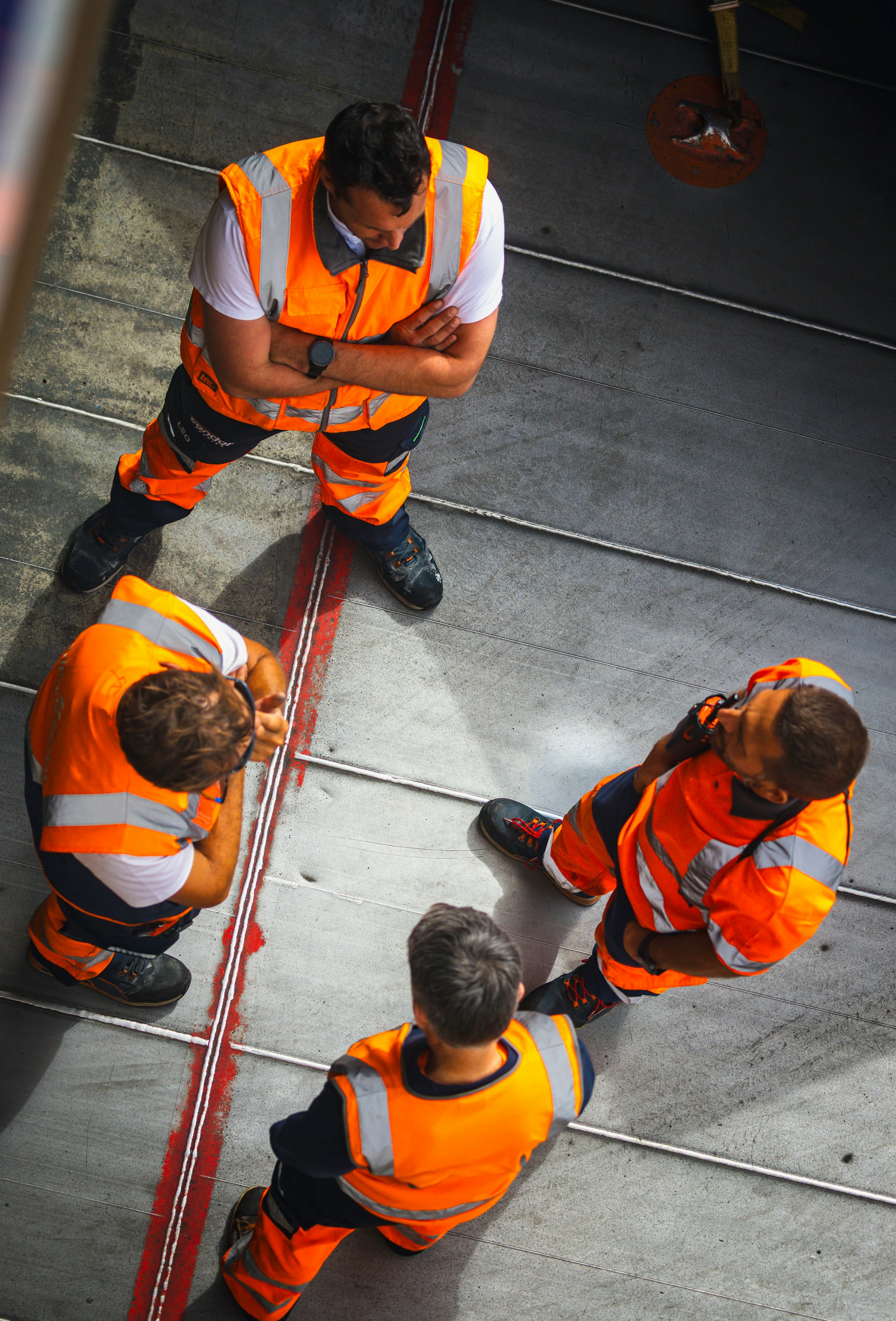
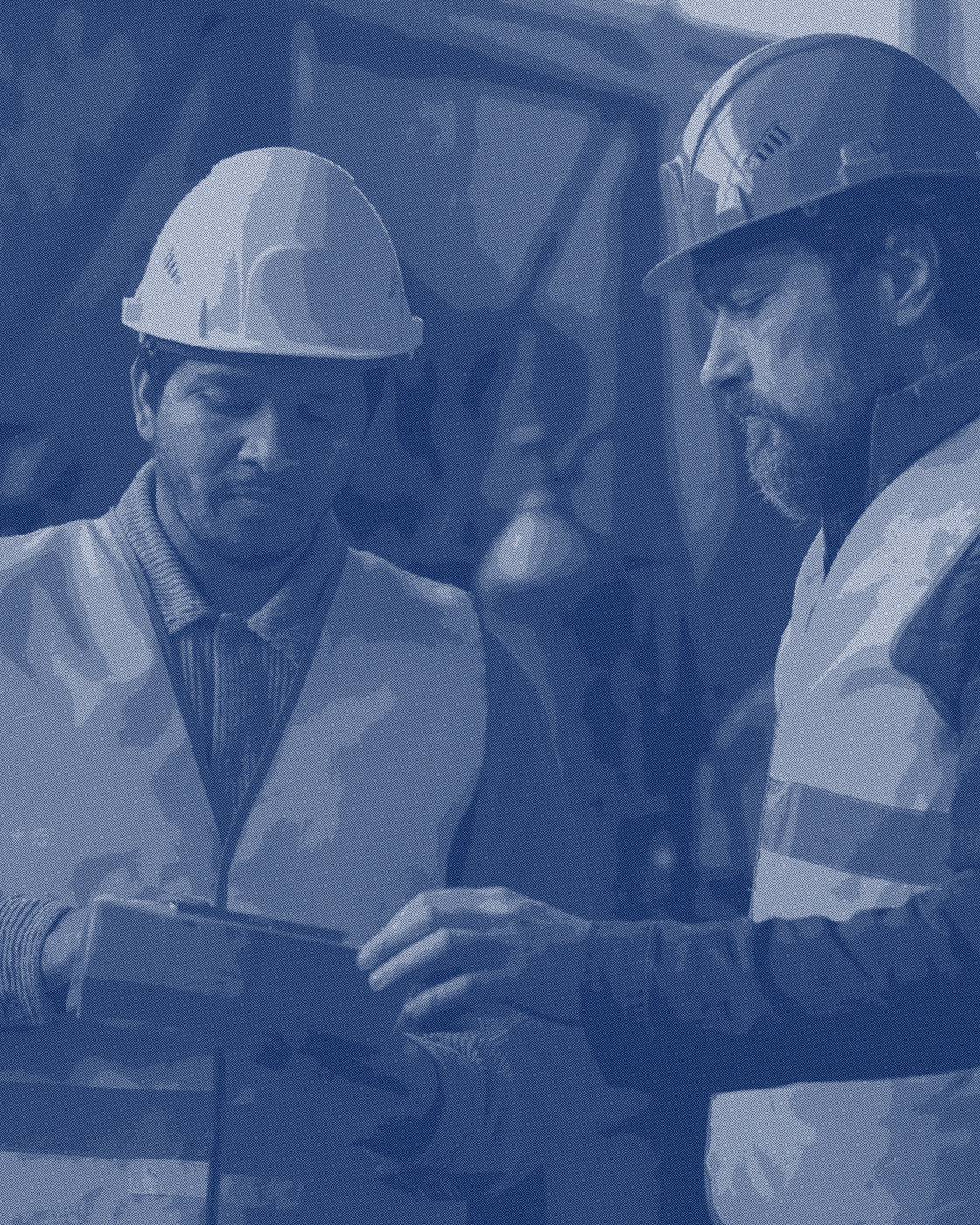
A crew in high-visibility vests standing together on a plant floor, one of them pointing along a marked walkway

Knowing what to do is not the same as doing it.

Most safety training ends with a signature. The rules get explained, the attendance list gets filed, and the subject is closed for another year.

But nobody acts from a document. In a dangerous moment there is no time to look anything up, and what comes back is what the hands have done before. So that is what a session is for: doing the thing once, where it costs nothing, and then doing it again.

People act the way they have already acted.

A briefing works on the part of a person that reads, weighs and decides. A dangerous second does not reach that part. It reaches the hands, and the hands repeat what they did last time — which, for a situation nobody has ever been in, is nothing.

That is the whole idea, and it is not new: pilots, surgeons and fire crews have rehearsed their worst days for decades. What has been missing on a plant floor is a way to rehearse a hazard without waiting for one.
A bad moment can be had on purpose.

In real work a serious situation turns up rarely, and it costs something every time it does. Here a team walks into the same one deliberately, gets it wrong, and walks in again — until the right move is the one they reach for first. Nothing has to stop while that happens.

It starts from your own risk assessment.

The document your company already keeps decides what gets rehearsed. We go through it with you and take the hazards that really occur in your work — not the ones that happen to sit in a catalogue. The instruction you have to hold stays as it is, and it stays yours.

Every session runs the same four steps

The order does not change, and neither does what each step is for. That is what makes a second run comparable to the first.

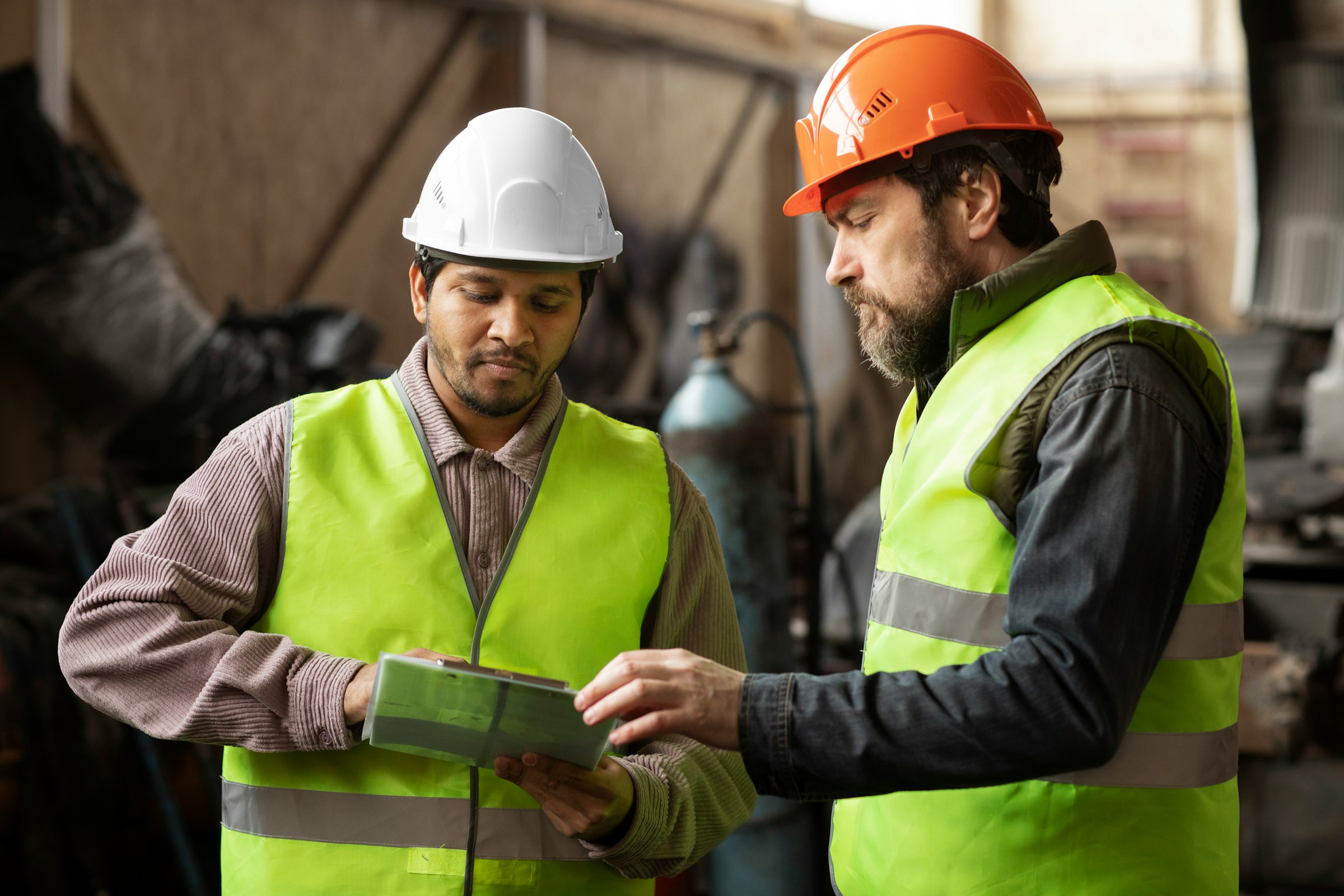
Two employees standing together in a workshop, going through a printed checklist
Naming the hazard 01 / 04
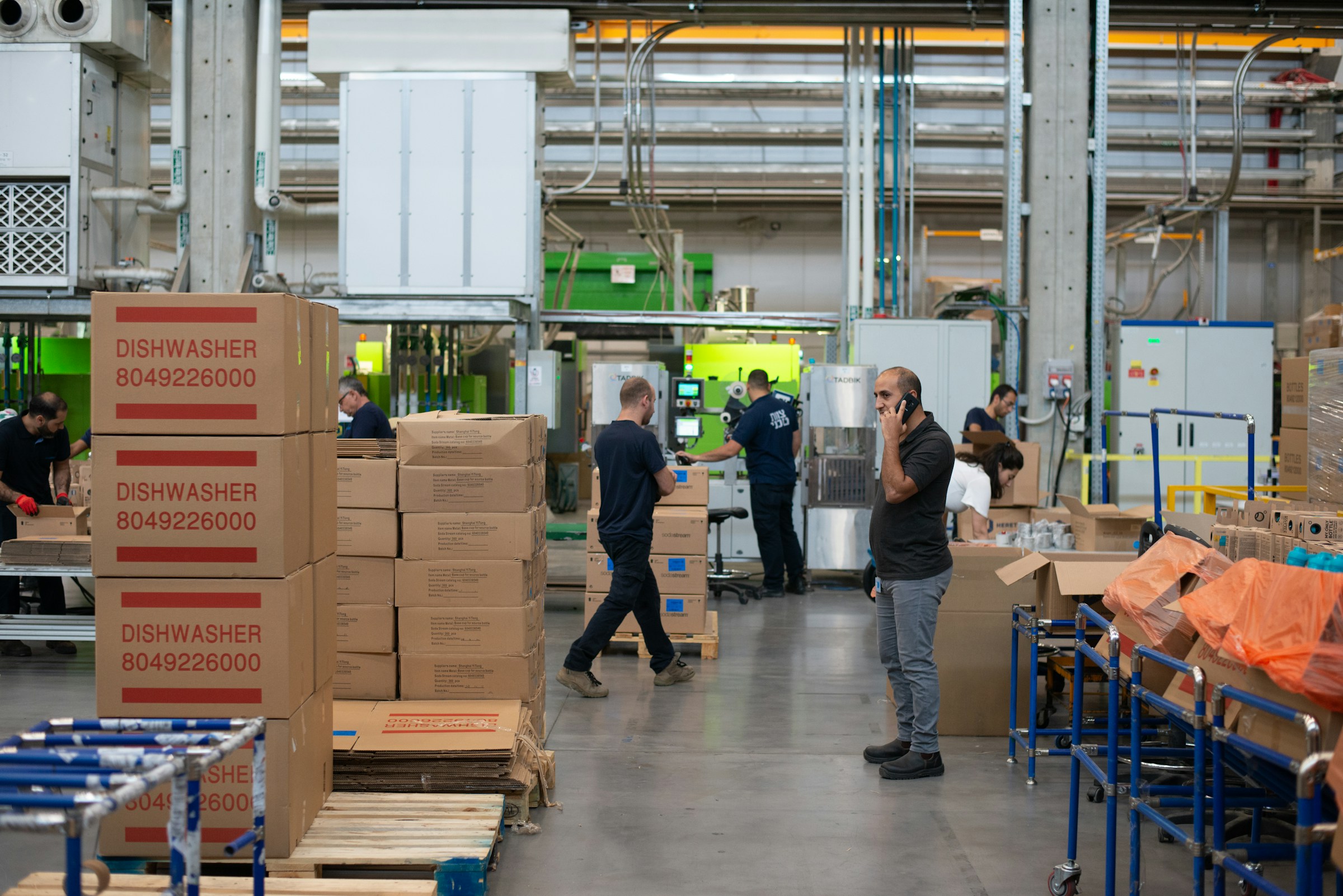
A production hall with cardboard boxes stacked on pallets, roll cages and people working at packing machines
Walking the place 02 / 04
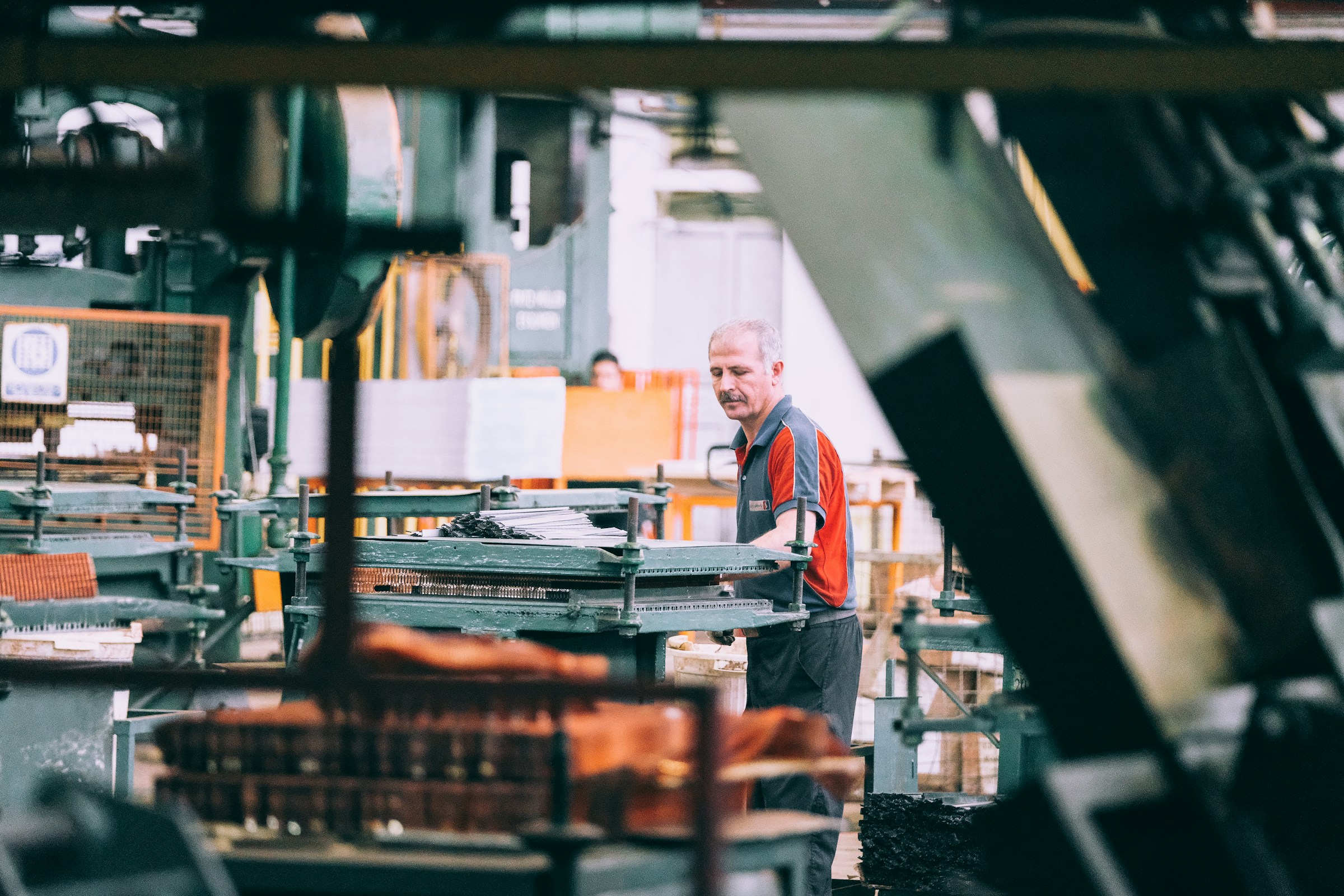
A worker at a press in a metal workshop, hands at the machine controls
Handling the situation 03 / 04
A group of workers in high-visibility clothing during a site briefing
Going through it afterwards 04 / 04

01 Naming the hazard

A session starts from the risk assessment that already exists for the workplace. The team goes through the hazards it lists and picks the ones worth rehearsing: the situations that are hard to describe on paper and easy to get wrong in the moment.

02 Walking the place

Before anyone acts, everyone sees the place: the routes, the corners you cannot look around, the machine that keeps running while the work happens. People who have worked there for years still find things here, because looking for hazards is a different task from doing the job.

03 Handling the situation

Then the situation runs and someone has to decide — not describe what they would do, but do it, with the noise and the time pressure that belong to it. A wrong move costs nothing here, which is the point: it can be made, seen, and made differently.

04 Going through it afterwards

Straight after, the team walks back through what happened: what was missed, what was reached for first, what the plan says should have happened instead. Whatever stays unclear goes into the next run — same situation, same place, a few days later.

The four steps are the same for every hazard. What changes between sessions is the situation in step three and how often it is repeated.

See which hazards there are sessions for

5–60min is what one training takes, from the first word to the last.

Short enough to fit into a shift.

Running times, not booked slots.

Every training has its own length, and the length follows the subject rather than a timetable. Putting on protective equipment is done in minutes. Setting up a site is not.

The time below is the time a person is away from the work. Nobody travels for it, and a second run costs the same minutes again — there is no visit to arrange and nothing to book a second time.

Every training, with the time it takes.

Personal protective equipment, electrical work
5–10 min
Fire evacuation
5–10 min
Aerial work platform
10–15 min
Welding safety
10–15 min
Construction site safety, civil works
10–20 min
Laboratory safety
10–20 min
Hazardous substances in storage
10–30 min
Substation isolation, low voltage
20–50 min
Site setup, all phases of civil works
30–60 min

Ranges, because a team that has done a training before gets through it faster than one that has not.

See what each of them covers

The first run is not the point. The fourth one is.

A single rehearsal is an afternoon people remember. What changes how they move is going back into the same situation, on a schedule you set.

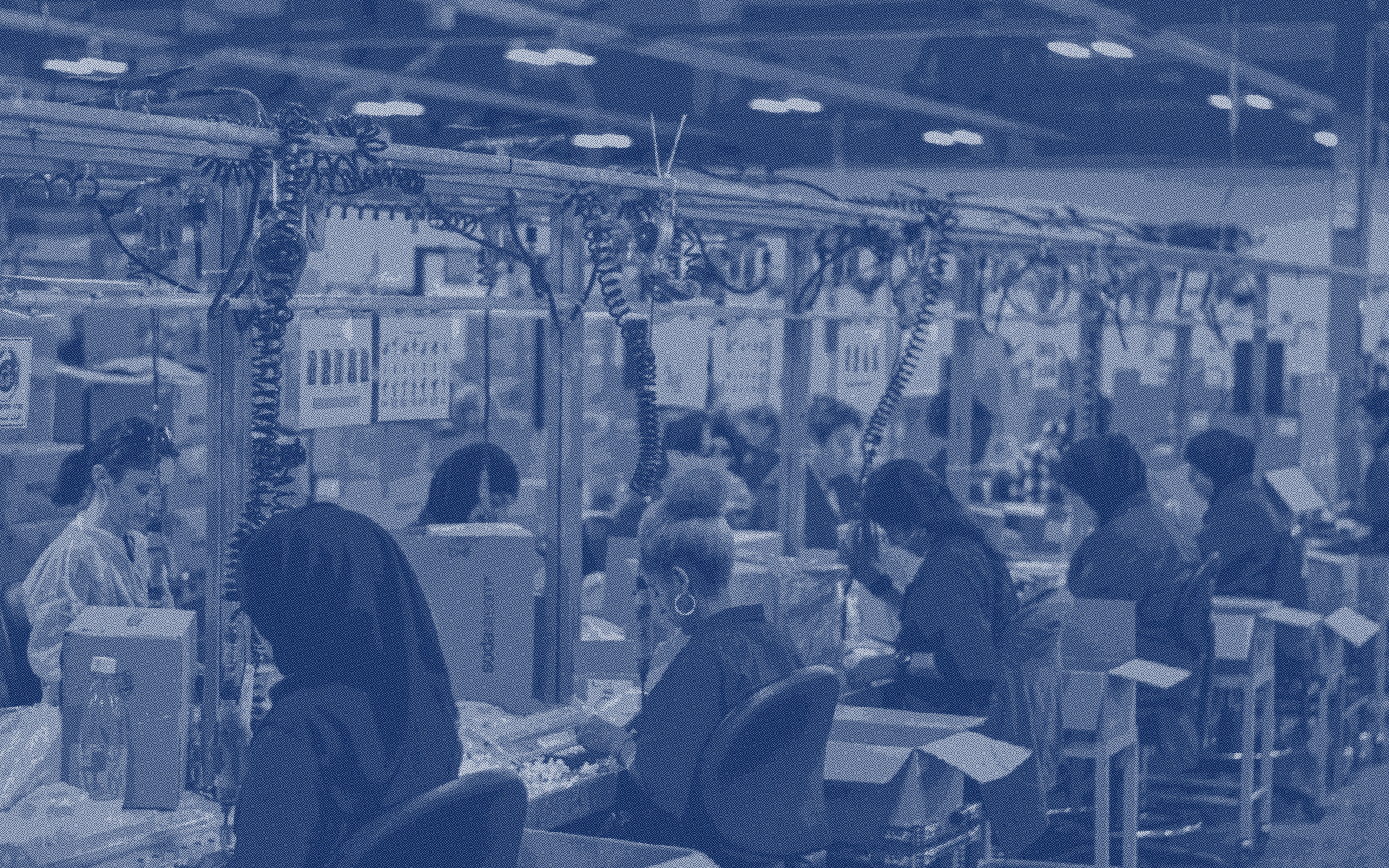
A long row of workstations in an assembly hall, tool hoses hanging from an overhead rail above every place
  1. Day 1

    One hazard, one team

    You pick a single hazard your assessment already names, and one shift goes through it. It takes minutes, and the work around it carries on.

  2. Week 2

    The same situation again

    Whatever went wrong the first time gets a second run, same place, same people. Nothing is booked again and nobody travels for it, so the second time is as cheap as the first.

  3. Month 3

    The next hazard joins

    Once the first one sits, you add the next line from the assessment. A team that has done one already needs no introduction to the second, and other sites can start from where you got to.

  4. Year 2

    The annual round has something in it

    When the yearly briefing comes round, the team is not hearing the topic for the first time. It goes back into the situation, and the record shows that it did.

The pace is yours. Some sites run one hazard a quarter, others put a whole shift through three in a morning.

What a year looks like in your industry

What changes, and what you can show for it.

Two different answers. One is about how people move on the floor. The other is what you can put in front of a works council, an auditor or a board.

  • A team that has already made the decision once

    In a dangerous second nobody decides, they only move. After a rehearsal the move that comes first is the practised one — because the wrong one was already made here, where it cost a few minutes and nothing else.

  • A briefing that lands on something

    Your safety instruction stays required and stays yours. What changes is that it is no longer the first time anyone meets the situation the rules were written for — which is the reason it used to slide off.

  • A record you do not have to prepare

    Who trained, in what, and when, by team and by site. It goes into the training file you keep anyway rather than a second one, and it exports the moment somebody asks for it.

The four numbers that describe the offer itself.

Unlimited
Repeats per team
A second run costs the same minutes, not a second booking.
Every site
Same session, same order
A team at the third plant gets what the first one got.
5–60 min
Time away from the work
Running times, not booked slots.
8
Hazard groups covered
From falls from height to internal traffic.

Three people have to agree before anything runs.

They are not asking the same question. A programme that answers only one of the three never gets past the other two.

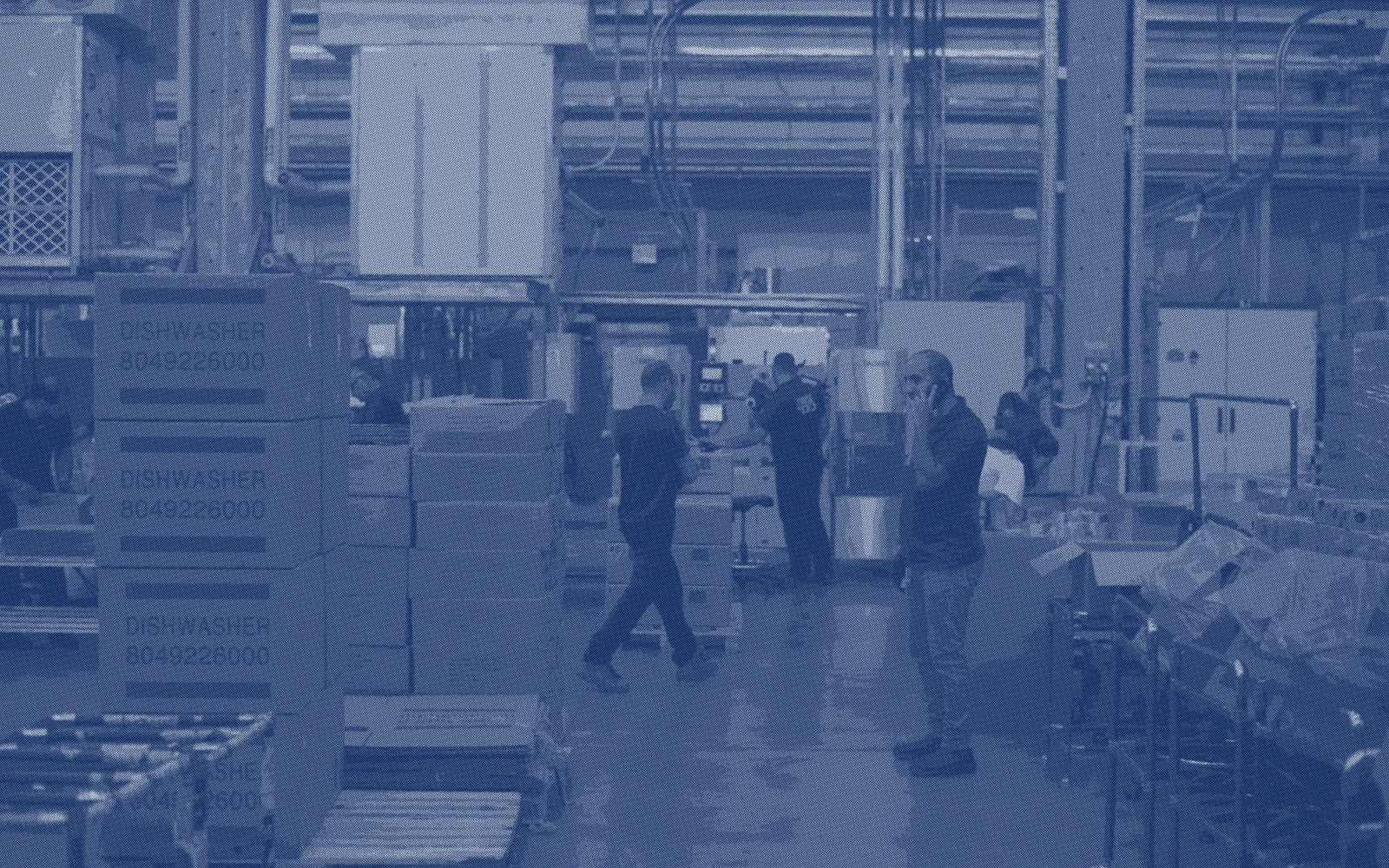
A dispatch hall with stacked pallets, people crossing the open floor between a control station and a pallet truck
“I have said the same sentence about that guard for six years. Now they have taken it off and put it back with their own hands, and they are the ones who bring it up.”
Safety specialist, Meinhardt Stahlwerke
“My only question was what it costs me in output. They go two at a time in the gap between shifts, so the answer was nothing. That is why I said yes.”
Plant manager, Trebbin Antriebstechnik
“I wanted to know what gets recorded about the people who take part. It is who was there and when, and it stops there. That was the point I would have blocked it over.”
Works council chair, Kessler Logistik

Setting it up, running it and keeping the record are ours.

Not only for the first month, but for as long as the programme runs. What stays on your side is the last panel: a room, a socket, and the time you put your teams in.

We set it up

The introduction runs with your team, on your floor. Nobody has to work out from a manual how a session goes, and there is nothing for your IT department to install or support.

We run it, as often as you want

The training itself, repeated whenever a team needs it again. One run takes minutes, so it fits into a shift instead of stopping one. The equipment comes ready to use, stays serviced, and is replaced when something breaks.

We keep the record

Every completed session is logged, and the record exports into the training file you already keep. Who took part, in what, and when — what someone did inside a session is not reported to anyone.

You bring the room and the time

A space where people can move safely, somewhere to charge, and a slot in the shift. That is the whole of your side of it.

The work on our side of that line has four names.

A programme that nobody sets up, nobody records and nobody maintains stops after the first month. These four are why yours does not.

Reporting
Who trained what, broken down by site. The list exports the moment somebody asks for it.
Nobody keeps a second list by hand.
System integration
The record is handed over to the system your company already runs, in the shape that system expects.
Nobody on your side builds anything.
Equipment service
What a session needs is provided, kept serviced, and replaced when it wears out.
Nothing to buy, nothing to keep in stock.
Rollout support
The first sessions run together with us, on your floor, until whoever is going to lead them has led one.
Nobody reads a manual to get started.

None of the four is booked separately, and none of them is a project for your own people.

What we carry, in full

Four industries we build for

The hazards are different in each of them. The way a session runs is the same everywhere.

Each page lists the hazards that industry actually reports and the trainings built for them, with the running time of every one.

All four side by side
Two people in hard hats standing close together, both looking down at the same thing in front of them

The case for starting now, not at the next review.

Nothing here needs a budget round, a project team or a decision about the whole company. It needs one hazard, one team and one afternoon — and after that you know something you cannot read off a page.

The shortlist is a page you can send round the people who have to agree, before anyone agrees to anything.

  • The people it reaches first are the ones you reach last

    Every new hire, every agency worker, every transfer from another line starts without the years that make a hazard look obvious. A briefing is exactly what does not stay with them. Having done the thing once does.

  • You can start with a single hazard

    This is not something you buy whole. One line from your own risk assessment, one team, one afternoon — and you can watch whether it does what this page says before anything else is decided.

  • A wrong move is cheapest here

    On the floor a wrong move costs a hand, a shift, or a report somebody has to write. In a session it costs a few minutes, and it is the only place where a person can make it on purpose and then make it again differently.

What is usually asked next

Sorted into two: what has to be settled before you decide, and what you live with once it runs. Where the answer is no, it starts with no.

Your question is not here

Write it in your own words. You get an answer in writing that you can pass on inside your company. We answer in English and German.

questions@preventario.example

Before you decide

Does this replace our safety instruction?

No. Your safety instruction stays required and stays yours. The sessions sit next to it and give people the situation the rules were written for, so the next briefing lands on something they have already done.

What does it cost?

Two figures, and no third one hidden behind them: €499 per module per year, plus €2.39 per learner per year. Everything on our side of the line above is in that — what a session needs, the servicing, the record, the first sessions run together with you. Repeats are not counted, so a team that goes through a hazard four times costs what a team that goes through it once costs.

I am not the one who decides this on my own.

Almost nobody is. Put the hazards you would start with on a shortlist and send it round before anyone has to agree to anything. It is a page, not a quote, and it says what each training covers and how long it runs.

Once it runs

What does our IT have to do?

Usually nothing. There is nothing for them to build, install or support, and nothing to buy or keep in stock. If you do want the record handed over to a system you already run, we talk that through with them directly.

What is written down about the people who take part?

Participation: who took part, in what, and when. Nobody is scored and nothing is graded. How someone handled a situation is not reported to anyone and does not go into a personnel file. We put that in writing before the first session, so your works council can read it instead of taking our word for it.

Can a team go through the same session again?

As often as it wants. Nothing has to be booked again and nobody has to come out to you for it. That is the whole point of the fourth step: what stayed unclear goes into the next run, a few days later, in the same place.

Bring your risk assessment to the demo.

We take one hazard from it and go through the training that covers it, the same way one of your people would.

What happens in the demo

  1. You pick the hazard From your own risk assessment, not from a demo script.
  2. We go through the training Start to finish, the same version your people would get.
  3. We look at your site Who would run it, on which shifts, and what a first group needs.