Preventario Preventario

Machines, forklifts and people share one floor.

Most of what goes wrong happens in the minutes around the work: at handover, during a changeover, in maintenance on a running plant.

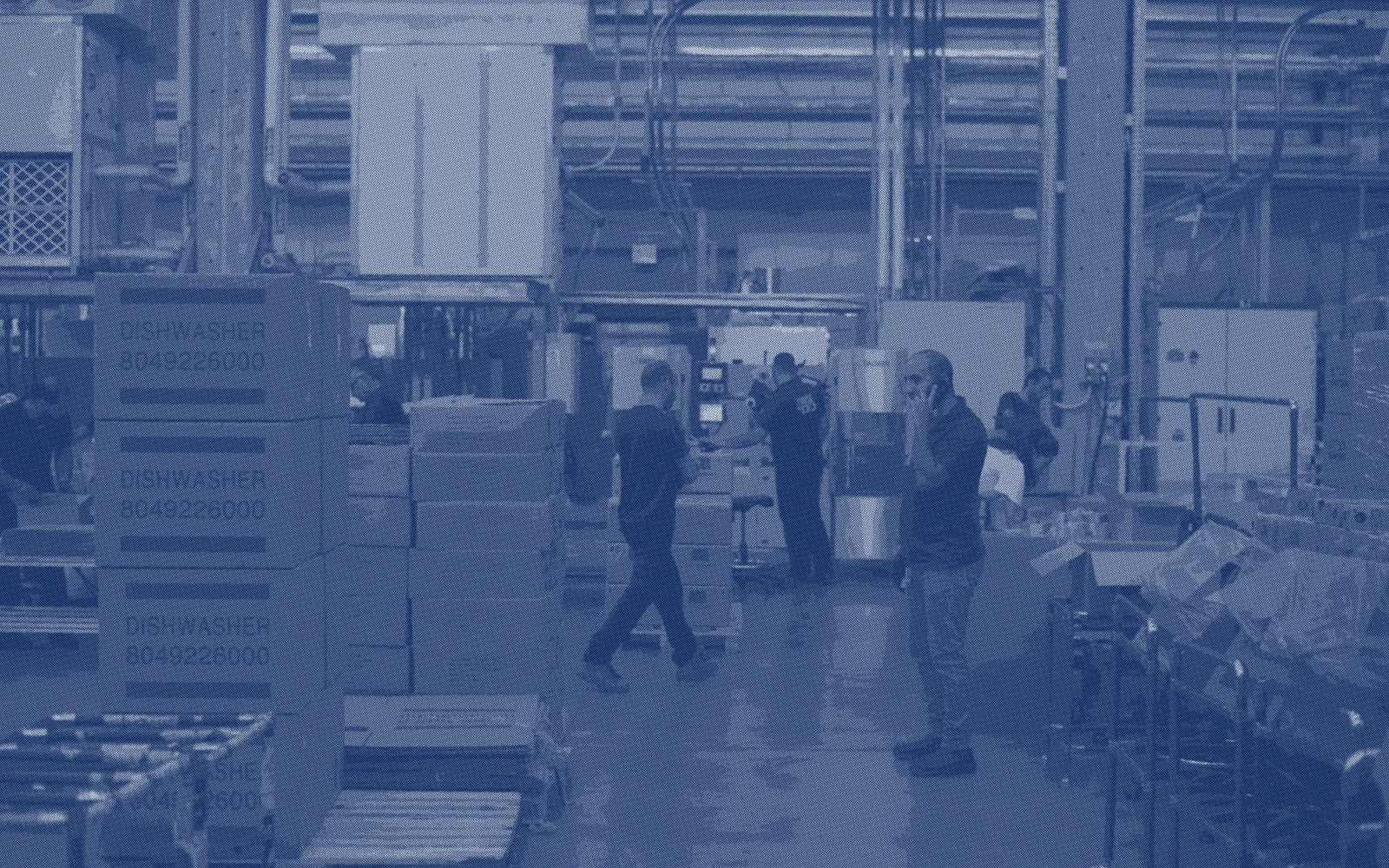
A production hall with stacked pallets and machines, one worker crossing the central aisle while others work at the line

Safety teams at

MEINHARDT STAHLWERKE Kessler Logistik SALZACH ENERGIE TREBBIN Antriebstechnik Reimann Tiefbau FISCHBACH KRANBAU

Six ordinary moments in a production week

Not one of them is unusual, and not one of them turns up in a report until something happens. Anybody on the floor can name all six.

At handover
Two shifts stand in the same aisle for ten minutes. One crew is explaining what the machine did overnight, the other is already reaching for the tools. Nobody is watching the aisle.
During a changeover
Guards are open, tools are in hand, and a line that costs money is standing still. The rules have not changed. The time people give themselves to follow them has.
Maintenance while the plant runs
One machine is isolated and the two beside it are not. The work happens in a metre of floor that belongs to both, and the person doing it has their back to the gangway.
When somebody new is on the floor
New starters, agency staff, a contractor crew in for a shutdown. They can read the markings. They cannot know that the tugger train comes through at half past six, or which door opens outwards.
On the way to the store
The gangway between two running machines is wide enough for a person or for a pallet truck. Twenty times a shift it is used by both, and the person is the one carrying something with two hands.
In the last twenty minutes
Coolant on the floor, swarf under a bench, an air line pulled across for one job. None of it looked dangerous when it was put there, and all of it is on the route the early shift walks.

Not one of these is somebody breaking a rule. They are ordinary hours in a production week, and they are the hours a briefing room cannot reproduce.
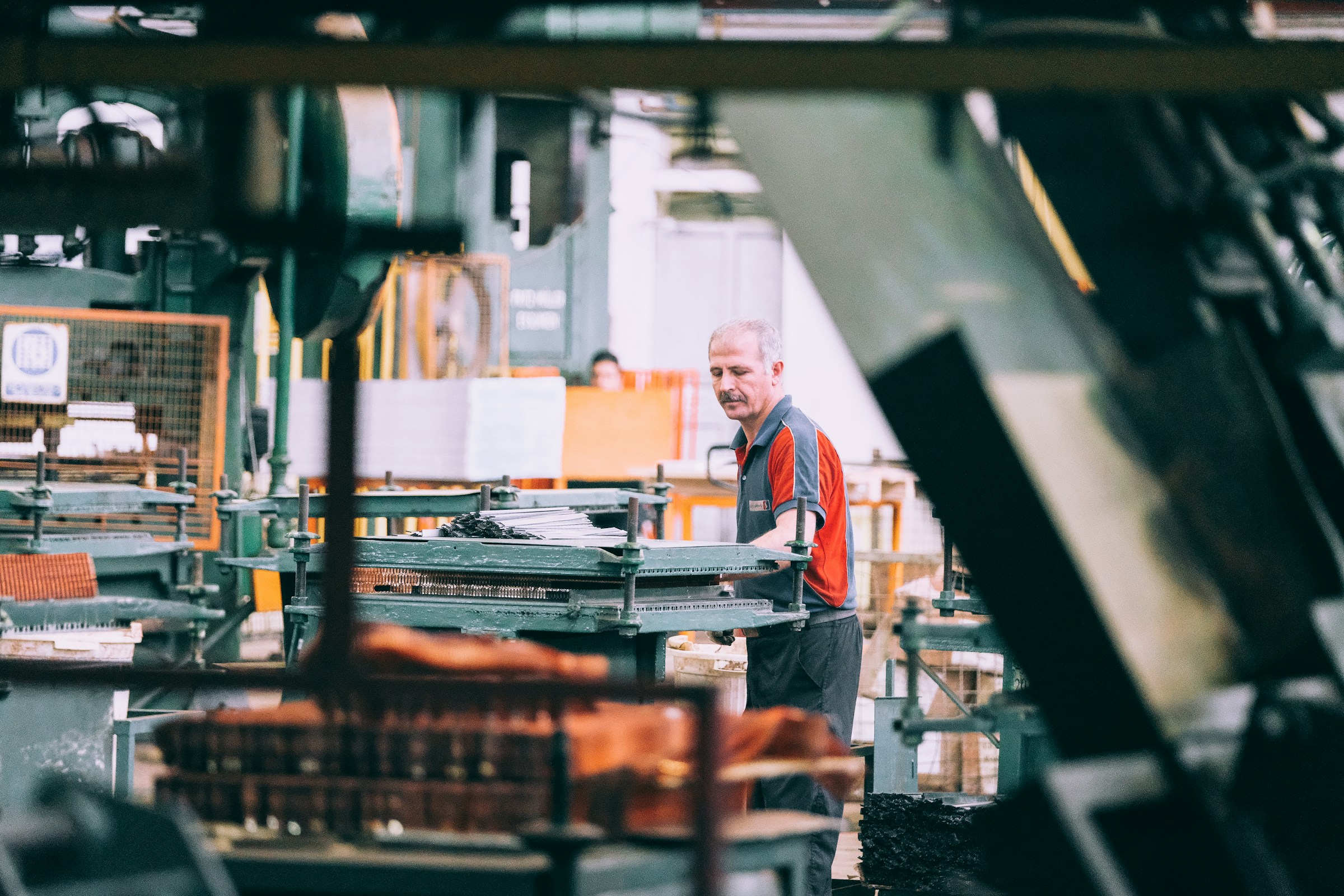
A man working at a press in a machine shop, seen between two other machines

Three hazard areas, one stretch of floor.

Your risk assessment lists them on separate pages. In a hall they turn up in the same gangway, in the same minute, and usually to the same person.

Of the eight hazard areas, only construction sites and falls from height kill more people at work than machinery and tools — 49 in a year. In a production hall, machinery and tools is the one that runs all day.

Germany, statutory accident insurance (DGUV)

“That guard is in the briefing every single year. In March somebody took it off to clear a jam, and I could not name one thing we had done differently since the year before.”
Safety specialist Trebbin Antriebstechnik, 640 people

None of this means stopping the line.

A run takes minutes and happens on your own floor. It fits into the gaps a shift already has, and a team can do it again as often as it needs to.

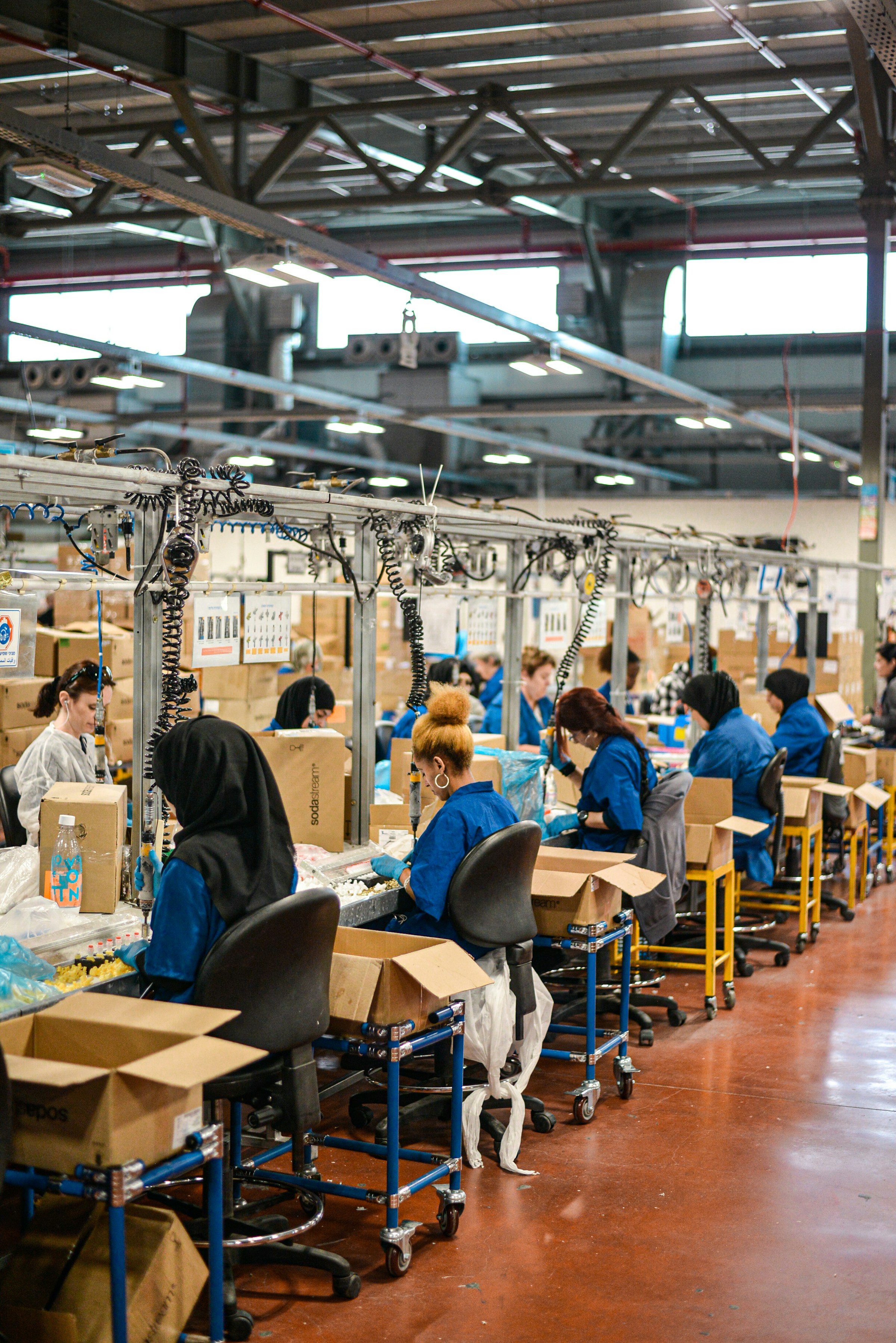
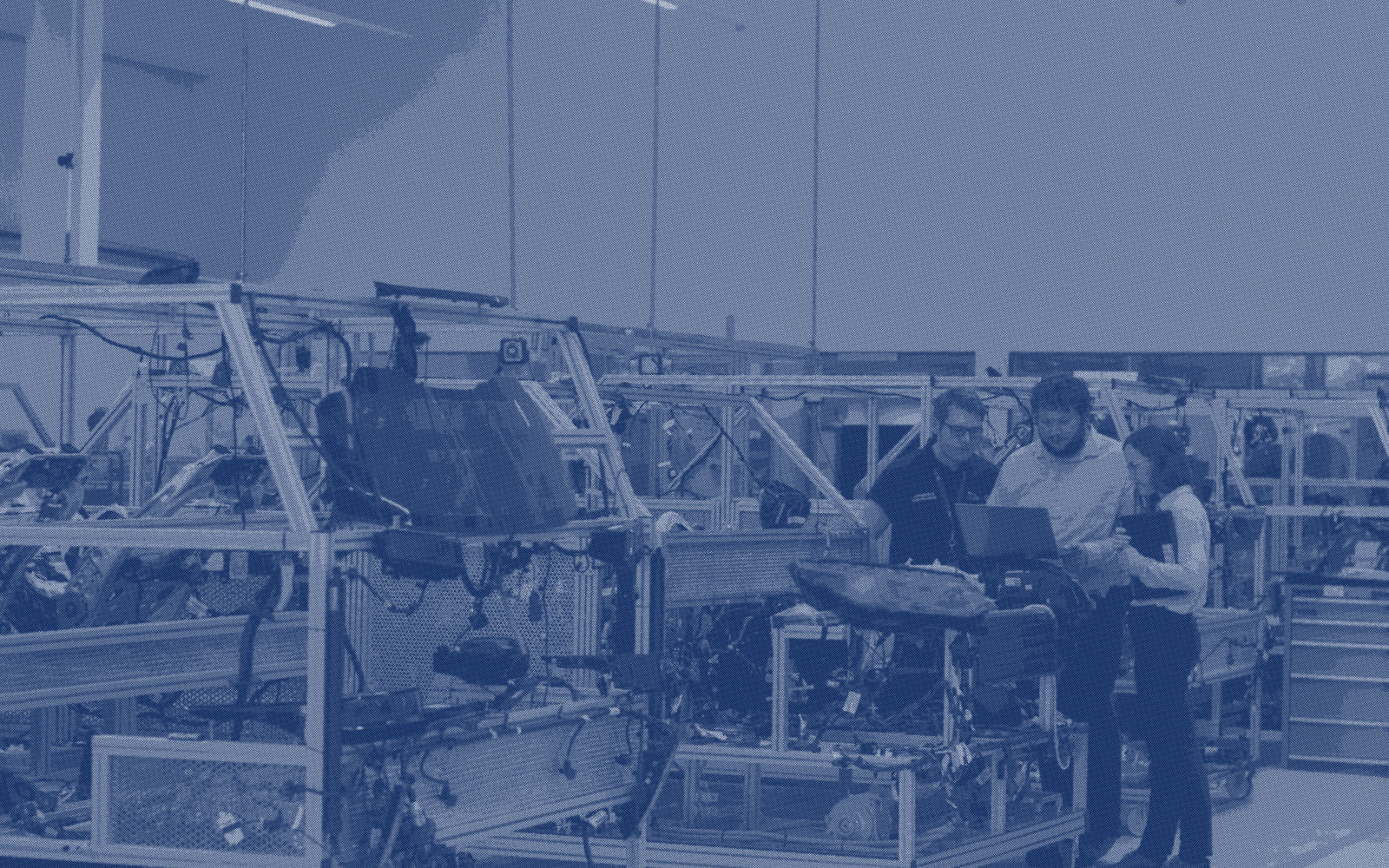
Workers at assembly benches along a production line, with tool balancers overhead and a wide gangway beside them

It fits into the gaps a shift already has.

Two or three people at a time, at handover, during a changeover, on a maintenance morning. The situation runs for them and ends when they are done. Nothing on the floor is shut down, roped off or slowed for it, and no machine is taken out of the plan.

That is what makes repeating it possible at all. The same situation can be run again the same week and again a year later, as often as somebody needs it, and it costs the shift the same few minutes every time.

Whoever is on the floor this week.

New starters, agency staff, a contractor crew in for a shutdown. They go through the same run as the permanent team, in the week they arrive, instead of waiting until enough people have been collected for a date.

Every run is written down.

Who took part, on what, and when — by team and by site, ready to export into the records you keep anyway. Participation, nothing about how a single person did.

Book a demo

We go through one training with you, start to finish, on a hazard out of your own assessment.

What it costs a shift

Four figures, all of them about the offer rather than about accidents. They are the ones you would put in front of a plant manager who asks what this takes out of a running week.

10
trainings for a production floor
Across the three hazard areas your assessment already names.
5–50min
for one run, start to finish
Learning time per person, not a slot booked out of the shift.
2–3
people in a group
A group forms out of whoever is on the floor, not out of a date.
No limit
on how often you repeat one
A module is held for a year, not paid for by the run.

The time is what one person spends in the situation, not the time equipment stands in your building. Three people going through the same training one after another take three times the running time and none of the setting up.

How a session runs
Rows of assembly benches in a factory hall, with coiled air lines and balanced tools hanging above them

Ten trainings for a production floor

Grouped the way your assessment groups them. The time is how long one run takes, from the first word to the last.

Machinery and tools 4

Internal traffic 2

Slips, trips and falls 4

Your shortlist builds itself as you go

One of these ten is already saved. Whatever you add here stays in the Shortlist at the top of this page, and we go through it with you in the call.

What one module costs, and what is in it

Two of the ten, in full. A module is held for a year and the price does not move with how often you run it.

A dark workshop bay with tools hanging on balancers over a bench where two people are working

Machinery and tools

Machine guarding and lockout, maintenance work

15–25 min per run

  • The training itself, repeated as often as you need.
  • Equipment supplied, maintained and replaced.
  • Attendance is recorded and exports into the records you already keep.

€499 per module per year

plus €2.39 per learner per year

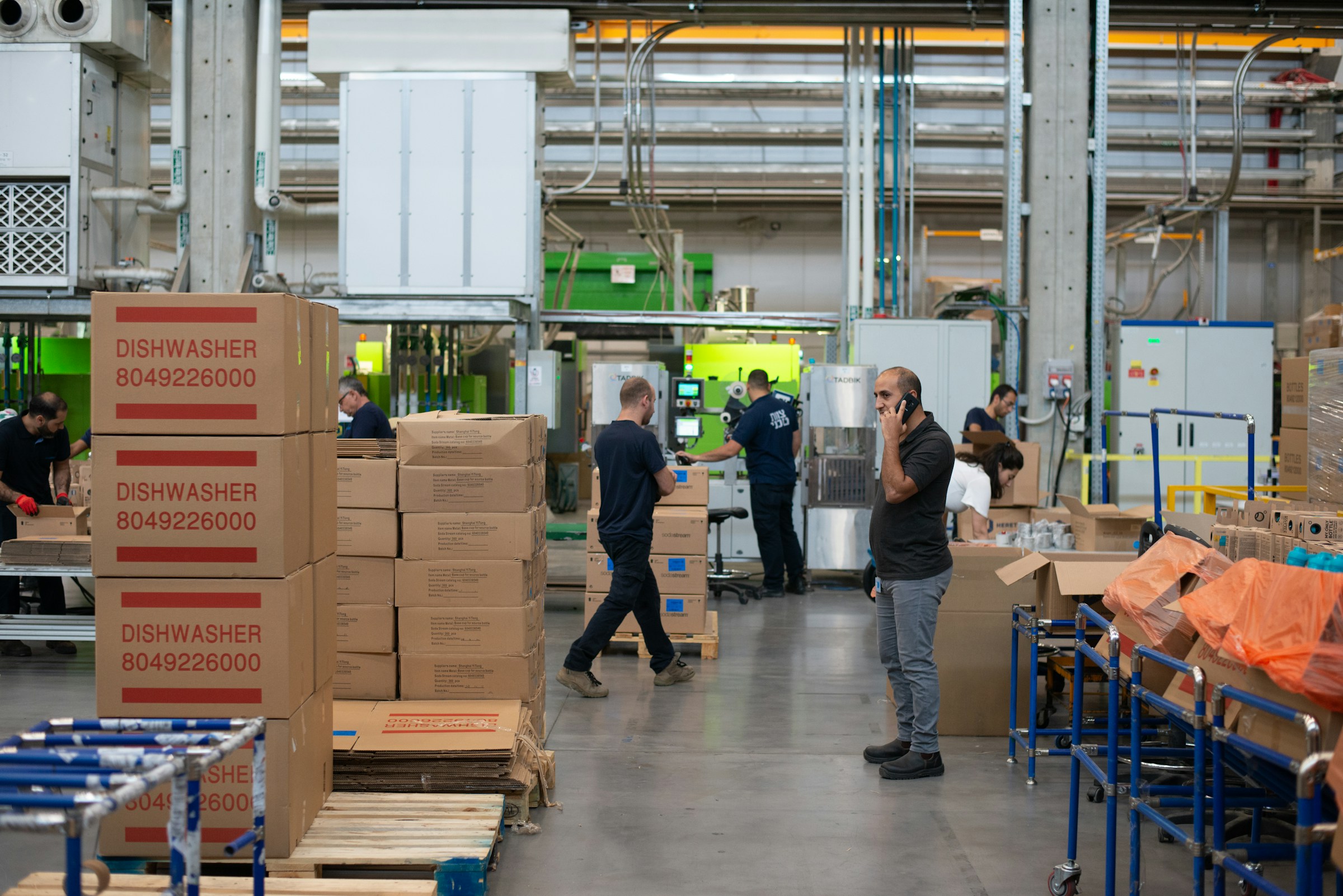
A plant floor with stacked cartons on pallets and a man walking across the aisle behind them

Internal traffic

Forklift and pedestrian crossings

10–20 min per run

  • The training itself, repeated as often as you need.
  • Equipment supplied, maintained and replaced.
  • Attendance is recorded and exports into the records you already keep.

€499 per module per year

plus €2.39 per learner per year

The learner figure counts the people you want to be able to take part, across every module you hold. It is not counted per session, so putting a new starter through in their first week does not change it.

Nobody in your plant has to look after this.

A safety specialist who already covers three sites does not need a fourth thing to maintain. These four run alongside the training and none of them is booked separately.

Reporting
Who trained on what, by team and by site. The list can be exported the day somebody asks for it.
Participation, not performance.
System integration
The record is handed over to the training file the plant already runs, in the form it already keeps it.
No second list to look in.
Equipment service
Everything needed for a run is provided, serviced and replaced when it fails. Nothing is bought and nothing sits in a cupboard.
Provided, serviced, replaced.
Rollout support
We run the first sessions on your floor, with your shift, until your own people run them without us.
The first units, together.

These four are the reason a training still happens in the second year. What stays on your side is a space where people can move safely, somewhere to charge, and a slot in the shift.

What runs alongside the training
An assembly line in a large hall, with three people standing at the end of it looking at paperwork and screens

Three people have to agree before anything runs.

They are not asking the same question. A session that only answers one of the three never gets past the other two.

“I have said the same sentence about that guard for six years. Now they have taken it off and put it back with their own hands, and they are the ones who bring it up.”
Safety specialist, Meinhardt Stahlwerke
“My only question was what it costs me in output. They go in two at a time at handover, so the answer was nothing. That is why I said yes.”
Plant manager, Trebbin Antriebstechnik
“I wanted to know what gets recorded about the people who take part. It is who was there and when, and it stops there. That was the point I would have blocked it over.”
Works council chair, Meinhardt Stahlwerke

The questions that come before a yes

Sorted into two: what you check before you decide, and what it takes to run it in a plant. Where the answer is no, it starts with no.

Your question is not here

Write it in your own words. You get an answer in writing that you can pass on inside your company. We answer in English and German.

questions@preventario.example

Before you decide

Does this replace our safety instruction?

No. Your safety instruction stays required and stays yours. The training sits next to it and gives people the situation the rules were written for, so the next briefing lands on something they have already done with their own hands.

Is the performance of individual employees checked?

No. Nobody is scored and nothing is graded. The plant gets a list of who took part, and that is all it gets. Individual results do not go to line managers and are not kept as a personnel file. We put that in writing before you start, so your works council can read it instead of taking our word for it.

Our works council will want this in writing. What can we give them?

One page, agreed before anyone takes part: what is recorded, what is not, who can see it, and how long it is kept. It is written with the council rather than handed to them, and it is the page everything later refers back to. Ask for it before the first session and take it into the meeting.

What does our IT have to do?

Usually nothing. The equipment runs on its own. It does not need your network, your directory, or anything installed on a machine in the plant. If you want the record connected to the system you already run, we tell your IT exactly what that takes and answer their questions directly.

Running it in a plant

Where in a shift does this actually happen?

In the gaps a shift already has: at handover, during a changeover, on a maintenance morning. Two or three people at a time step out, go through the situation and go back. Nothing on the floor is shut down, roped off or slowed for it.

Do agency staff and contractors count?

They can go through the same run as the permanent team, in the week they arrive. That is usually the point of it: the people who do not yet know which gangway the tugger train uses are the ones a briefing reaches latest.

Several plants — does everyone run the same thing?

They can, and most should not. You pick the hazards per site, because a press shop and a packing hall do not share a risk assessment. The equipment moves between sites, so you do not need a set standing in every building to get going.

How do we start?

With one hazard at one plant, run with the people who would actually use it rather than with the management team. They tell you afterwards whether it was worth their time. The first conversation is about your risk assessment, not about a contract.

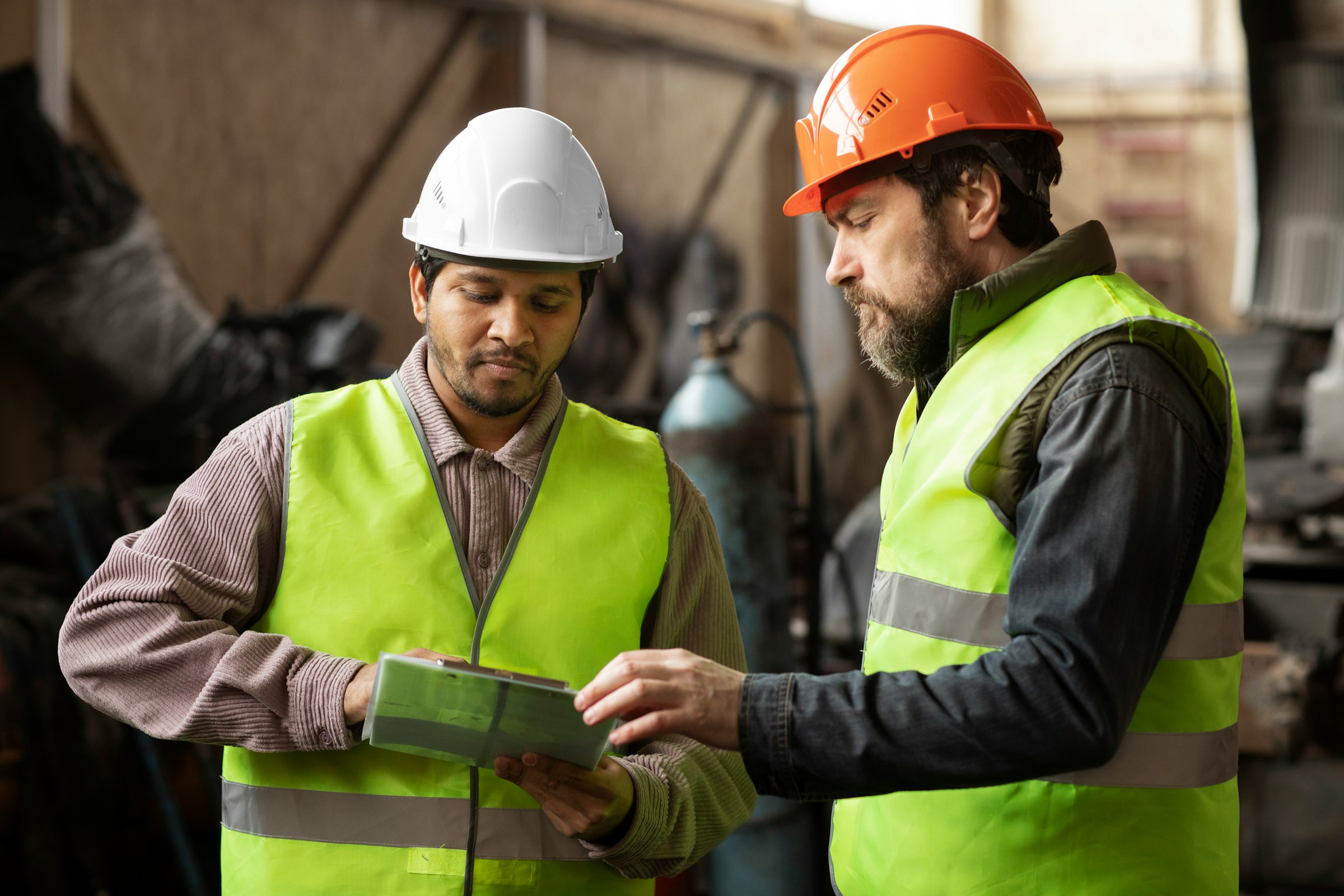
Two workers in high-visibility vests and hard hats going through a document together on a workshop floor

Bring the risk assessment for one of your halls.

We take one hazard out of it — the machine, the route or the floor — and go through the training that covers it, the same way one of your people would.

What happens in the demo

  1. You pick the hazard From your own risk assessment, not from a demo script.
  2. We go through the training Start to finish, the same version your people would get.
  3. We work out where it fits Which shift, which gap in it, who runs it, and what a first group on the floor needs.