


Preventario Preventario

The list is already written when somebody asks for it.

Who trained on what, and when — recorded as a session ends and kept apart per site. This page names every field an entry holds, the form it comes back out in, and what happens the day a request lands on your desk.

Two workers in high-visibility vests going through a checklist at the end of a shift

The training is not the part that slips.

In most companies the record of who was trained lives in one spreadsheet, on one computer, kept by one person who did not ask for the job. Sheets come back from three sites in three shapes. Names are spelled two ways. A leaver is still on it.

None of that shows until the morning somebody wants to see it, and then it takes two days and three phone calls to produce a list that describes last quarter. The training happened. It is the proof of it that arrives late.

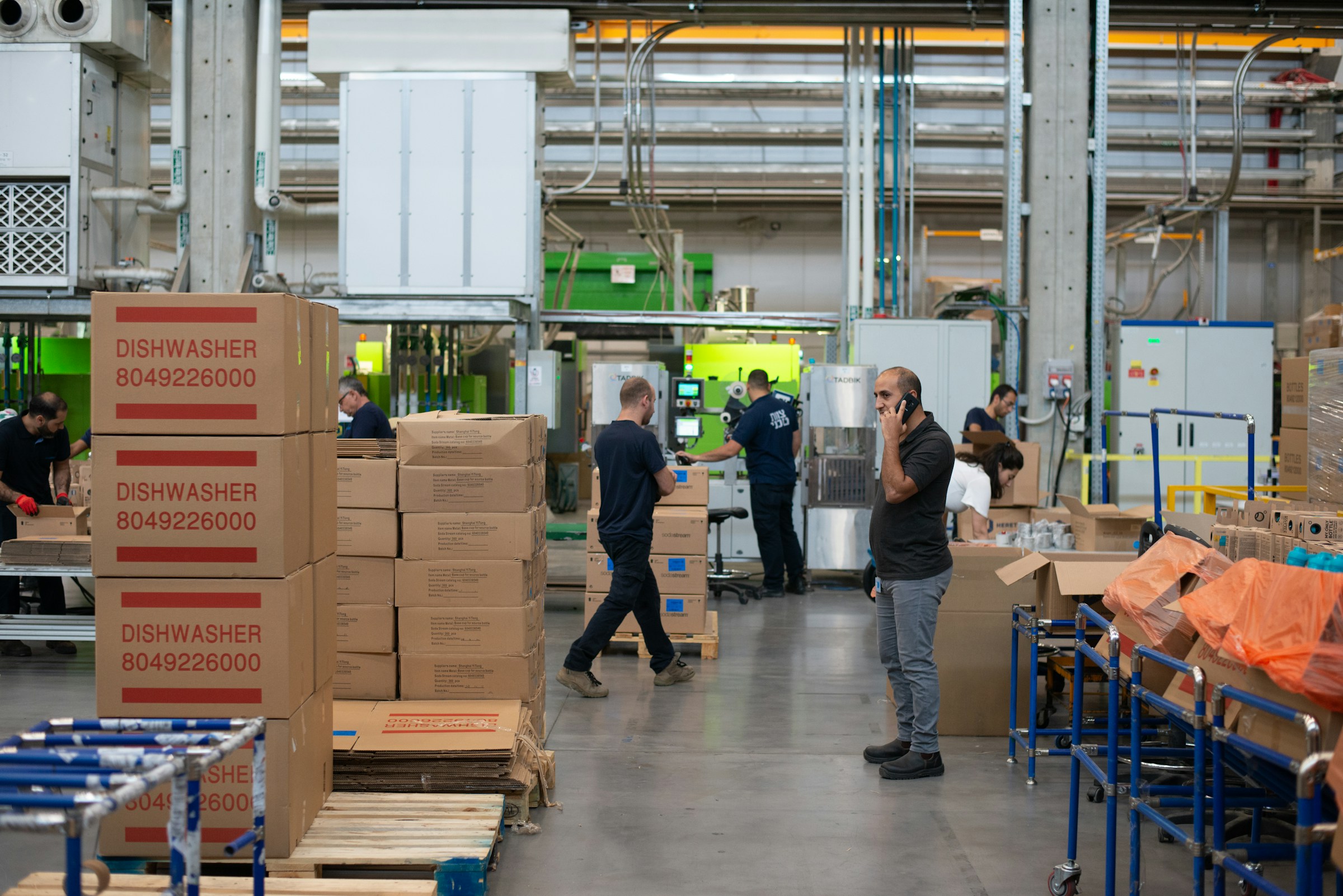
A production hall seen along the main aisle, several teams at work

What one entry contains

An entry is written when somebody finishes a training, and it is written once. These are all of its fields.

Person
The name the way your own records spell it, taken from the list you hand over at the start. Nobody ends up in the file twice under two spellings of the same name.
Training
The title as it stands in the catalogue. Not a topic and not a category — the training itself, so two entries can be told apart a year later.
Date
The day it was completed, written as the session ends. Nothing is reconstructed afterwards from a sign-in sheet or from somebody remembering which week it was.
Site
Where it happened. Sites are kept apart from the first entry onwards, so one location’s list never has to be sorted out of another’s later on.
Team
The group the person belongs to, named the way your own structure names it. That is what lets the person responsible for one area read their part without seeing everybody else’s.
Completed
Whether the person worked the training through to the end. Participation, and nothing about how one individual did: no score, no ranking, no comparison between people.

One entry, filled in

Person
Marleen Vogt
Training
Machine guarding and lockout
Date
2026‑03‑11
Site
Plant 2, Bruchsal
Team
Assembly, late shift
Completed
Yes

That is the entry. There is no seventh field, and nothing is held about a person that is not on this list.

From a finished session to your own file

The first two stations run without anybody doing anything. At the fourth the record has left us and is part of the documentation you already keep.

  1. 1

    A session ends

    Somebody works a training through to the end, between shifts and without stopping anything. That completion is the event, and everything after it refers to it.

  2. 2

    The entry is written

    The six fields, filled from what was already known. Nobody types it up, nobody signs a sheet, and no version of the list is a week behind another.

  3. 3

    Somebody asks for it

    Name a site and a period. What comes back is the list for exactly that — a table you can open and sort, or a dated printout you can hand across a desk.

    For example CSV or XLSX to work with, PDF to file.

  4. 4

    It goes into your records

    From here it sits in your own documentation, filed the way you file everything else about a person. Past this line nothing depends on us.

The first three stations are the same for every training and every site. The fourth follows whatever your documentation already does.

A shift handover on a plant floor, two crews going through the day's work

Safety teams at

MEINHARDT STAHLWERKE Kessler Logistik SALZACH ENERGIE TREBBIN Antriebstechnik Reimann Tiefbau FISCHBACH KRANBAU

Go through the field list with the people at your company who would have to read it. That conversation takes half an hour and settles most of what comes up later.

What is held, and what is not

The right-hand column is the one to take into the meeting. It is not a limitation. It is the answer to the question that gets asked there.

Held

Who took part
The person by name, as your own records spell it, with the team and the site they belong to.
Which training, on which day
The title from the catalogue and the date the session ended. Both written at the time, neither entered afterwards.
Whether it was finished
Worked through to the end, or not. One of two answers, and nothing between them.

Not held

No score and no ranking
How one person got through a training is not written down, so it cannot be read later, compared, or asked for.
No record of what a person did in the room
What happens during a session stays in the session. Only that it was finished leaves it.
Nothing about a person you did not hand over
Name, team and site come from your own list. There is no second source, and nothing is added to it from anywhere else.

Both columns are agreed in writing before the first session runs, and the page they are written on is the one everything later refers back to.

When somebody asks to see it

Three people ask, for three different reasons. Each of them gets the same list, cut to what they asked about.

A supervisor asks about their own area
Who in that team has worked through which training, and on which day. It is current up to the last session that ended, because there is no update step between the session and the list.
Their area, and only theirs.
The works council asks what is held
The six fields, in full, before anybody trains at all. Whether a training was completed is on record; how one person got through it is not recorded at all, so it cannot be asked for later either.
The whole field list, in writing.
A request comes in from outside
The list for the site and the period they name: person, training, date. Nothing is assembled after the fact, because every line was written on the day it happened.
Named, dated, exported.

What is on record is the training your teams worked through: who, on what, and when. The safety instruction you are required to give stays yours to run and to document, and this is filed next to it, in the same place.

How a session runs

It goes into the file you already keep.

Most companies already have three or four places where something about an employee is written down. What makes a new one unwelcome is not the software. It is that somebody has to keep it current, and that somebody is always the same person.

So the training record does not open a place of its own. It is handed over into the file your company already keeps on a person, and that file stays the one file.

There is no second list to keep current.

Nobody is put in charge of it, nobody chases people for it, and it cannot drift out of step with the other one — because there is no other one. When somebody wants to know what a person has trained on, they look where they already look.

Which file that is, you decide.

Most companies point it at one of four: a personnel system such as Personalwerk, a learning platform such as Lernbahn, an occupational-safety application such as Sicherheitsakte, or time recording such as Zeitpunkt. Agreeing which one, and in what form, is a conversation at the start — and the one point on this page where your IT department is involved at all.

The record in four numbers

Three of them are small on purpose. A record that is easy to explain is one that still gets kept in the second year.

None of these change with the number of trainings you pick. They are properties of the record, not of the order.

Three people had to agree to this record.

They were not asking the same question about it. Each of them says here which answer settled it.

“I used to spend the last week of every quarter chasing three sites for their sheets. I asked for the list this morning and read it before lunch.”
Safety specialist, metal fabrication
“My condition was that it does not become a fourth place to look. It lands in the file we already keep on the person, so it did not.”
Head of personnel, 900 people, four sites
“We had the list of fields on one page before the first session ran. What is not on that page is not kept, and that was the point I would have blocked it over.”
Works council chair, logistics
A crew at a plant crossing, one worker signalling to a driver
A shift supervisor and a worker talking beside a marked walkway in a plant

Nobody at your company is assigned to it

There is no administrator to appoint, no one to chase people for entries, and nothing that has to be kept current between sessions. The one thing asked of you is the list of names at the start, and a note when somebody joins or leaves.

That is why the second question is easier than it looks. What you pay for is the training itself. Everything on this page runs alongside it and is not a line of its own.

What else runs alongside

What the price covers

The trainings you pick, for as many repeats as your teams need, at every site named in the agreement.

Per module, per year
€499
Per learner, per year
€2.39

Not billed separately

The record, the hand-over into your own systems, the equipment and the first sessions on site. There is no service level to choose and nothing billed by the visit.

What gets asked in the meeting

Sorted into two: what people want to know about the record itself, and what they want to know about handing it over. Where the answer is no, it starts with no.

Your question is not here

Write it in your own words. You get an answer in writing that you can pass on inside your company. We answer in English and German.

questions@preventario.example

About the record

Does this replace the safety instruction we have to give?

No. Your instruction stays required and stays yours to run and to document. What this record holds is the training your teams worked through, and it is filed in the same place, next to it.

Can a manager see how one person performed?

No, and not because it is hidden from them. How a person got through a training is not written down anywhere, so there is nothing to release, to request or to leak later.

We run three shifts. Does the record cover people who train at night?

Yes. An entry is written when a session ends, whichever shift that is, and the team field carries the shift the way your own structure names it. Nothing has to be open for it to be recorded, and nothing stops for it either.

Somebody leaves the company. What happens to their entries?

They follow your own rules, because by then they sit in your own file. How long a training record is kept is decided by the same policy that decides it for everything else you hold about that person.

About handing it over

How much of this lands on our IT department?

One conversation at the start, to agree which file the record is handed into and in what form. After that there is nothing for them to run, to host or to keep updated.

What if we would rather keep it separate for now?

Then you ask for the list when you need it and file it yourself. Companies usually start that way and connect it once the first year has shown them how often they reach for it.

Who decides what the works council gets to see?

You do, and it is settled before the first session. The field list goes on one page, both columns of it, and that page is what everything later refers back to.

The record is one of four

None of them is booked separately, and none of them is the reason anybody starts. Together they are the reason a training still happens in the second year.

Each page says what the service does, what it does not do, and what it asks of you.

All four services

Go through the entry with the people who would have to read it.

Bring whoever keeps the personnel file, whoever answers when an outside request comes in, and one person from the works council. We go through the fields one by one, and through what it takes to hand them into the file you already keep. Half an hour, and you leave with the field list in writing.

What is in it
Person, training, date, site, team, completed
How you get it
A table to work with, or a dated printout to file
Where it ends up
In the records you already keep